

Post headline leaves out significant context, again
By only adding context in the subhead, most Post readers won't see the rest of the story

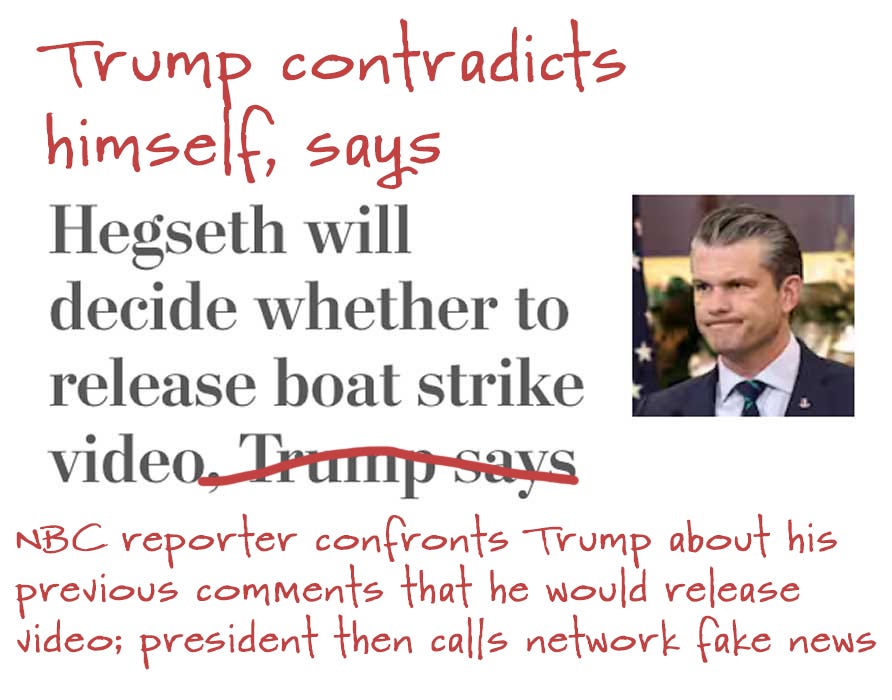
The Washington Post doesn’t get a pass here just becauses it eventually includes context in the subhead for its December 8 story about President Trump’s flip-flop on his statement last week that he would release video of a military strike on a civilian boat in international waters, an act that legal experts are calling murder.
By omitting it from the headline that simply states what he says now, most readers will not see the all-important context. That’s because only the headline appears on the homepage of the Post. Most readers won’t click the headline to read the story or see the subhead, which lays out the context of why what he said yesterday is significant: “The comments come after the president previously said his administration would release video of a controversial military operation, “no problem.””
Trump made these comments in response to a question from Rachel Scott of ABC News and can be seen here, which includes his earlier statements on camera as well.
News organizations and headline writers know that most readers don’t read past the headlines. So, why do they keep writing headlines that simplify and mislead readers?
You diagnose a huge problem. Subheads, not headlines, often speak to the greater truth but they're subordinate and can easily be overlooked. I wonder how and why this happens so often and what power, if any, reporters can exercise over the headline editors who seem so gun shy.